
So let’s face the facts here. I know I’ve mentioned before that when you enroll in an Emergency Medical Technician program, they are going to teach you how to pass National Registry rather than get you up and running as a functional EMT. That’s true in a multitude of fashions. However the information that you learn as well as the skills are still relevant to what you will encounter in the field. That doesn’t mean that there aren’t a few surprises that you’ll encounter, even if you read and memorized your textbook from cover to cover. The human body is a complex system and although we all share similar physiologies no one is 100% the same, except for identical twins of course. This means that even though two people are having the same emergency, they can be presenting the emergency in vastly different ways.
For example, one of my shifts over the last month I went on two calls that were both dispatched as chest pain. However the two calls could not have presented more differently. The first was an older gentleman who was found in a seated position on his bed in his bedroom. His chief complaint was generalized weakness with a midaxillary left side chest pressure that was intermittent. He had not been feeling well over the last couple of days mentioning globalized weakness and a shortness of breath just from moving about the house. He was not concerned about his condition until the morning that he contacted 911 due to the onset of the side chest pressure. When I asked him to describe it, he stated that it felt as though someone was squeezing his left side and that it truly was not painful. He also stated that during some of the moments when the chest pressure was present, the same sensation would radiate up towards his left scapula (shoulder blade). Admittedly, I was not 100% convinced that this gentleman was experiencing a cardiac event until I continued to question him and found out his current symptoms were similar to those he experienced in 1998 when he had a myocardial infarction. That statement alone was enough for me to get him into a stairchair, onto the stretcher, into the ambulance, and across the street to the hospital immediately. If I had been not been literally across from the hospital I would have called for ALS support to kind of give to an indication to how drastically this man’s condition changed in my eyes.
Later in the day when we returned to the hospital and inquired about the patient’s status the nurse indicated that he was sent to the catheterization lab for imagining and they discovered that he had a myocardial infarction sometime over last evening into the morning of the incident.
My second patient, that very same day, was an older woman who was found in a seated position on one of the couches in her living room. When we arrived she stated that she was having non-painful centralized chest pressure, but her chief complaint was the 10/10 pain radiating down her arms and into her hands bilaterally. Although she had no cardiac history, her family history was riddled with it. She was also experiencing slight shortness of breath and explained that she was decorating for the holidays, sat down to take a break to watch the news and that’s when the symptoms began. As we waited for our paramedic who was a couple minutes behind us to arrive on scene, my partner and I were trying to figure out if she was having a true cardiac event or not. Although the pressure sensation the patient was having did not change upon palpation, the pain in her arms increased when she raised them indicating that the problem might be muscoloskeletal in nature. When we loaded the patient into our ambulance and transferred care to the paramedic, he too was having a difficult time deciding if the patient was having a cardiac event because his 12-lead EKG did not produce any major wave patterns indicative of a cardiac problem. At this point in time the patient denied having any symptoms other than the 10/10 hand pain that seemed to increase on the way to the hospital.
When we arrived to the hospital, my partner and I took the patient into her assigned room while our paramedic gave report to the receiving nurse. The nurse and the paramedic re-looked at the 12 lead EKG print out and neither seemed to notice a cardiac emergency pattern. However shortly after the nurse got to the patient’s room, the patient had a STEMI (ST-Elevation Myocardial Infarction).
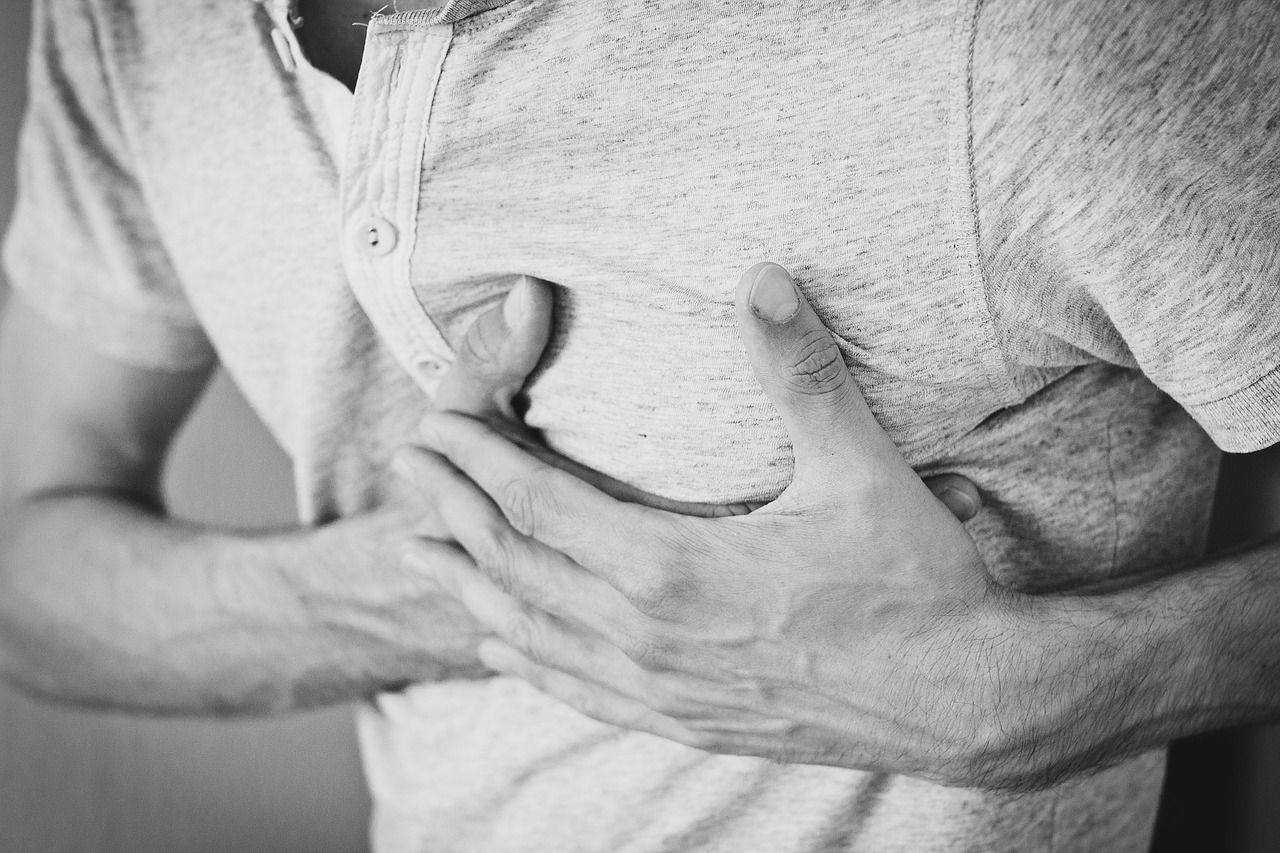
Now in case you are wondering, the textbook presentation of a cardiac emergency involves a crushing pain located in the center of the chest that lasts continuously for several minutes. The pain is often known to radiate to the left side and travel down the left arm or up into the left side of a person’s jaw. In addition to these pain symptoms, a patient typically expresses feeling fatigued, short of breath, diaphoretic (sweaty), unable to sleep, and sometimes patient’s develop an impending sense of doom. Generally speaking when you are looking at a person who is having a cardiac emergency they simply do not look well. When the heart is not functioning correctly, profusion in the body becomes inadequate and the condition of the person’s body appears pale. Clearly neither of my patients had a textbook presentation and due to the time of year, age of my patients, and how they presented in the moment, I was not entirely convinced they were having cardiac emergencies. However, because I could not indefinitely rule out a cardiac event I treated them both as if that were the case.
“Medicine is a science of uncertainty and an art of probability.” -Willam Osler
I learned two very important lessons that day. The first being that no one presents as the textbooks say they should. You always need to use your best judgement in the field and even though our jobs are to treat the emergency conditions we come across, we don’t always have to be able to diagnose exactly what’s wrong. The second being that when in doubt always suspect the worse, especially if you cannot confidently rule it out as the cause. It’s always better to be prepared for the worse possible outcome than to be scrambling around when the worst happens.
 Adventures into EMS